Open-source Llama synthesized bacterial DNA data for training
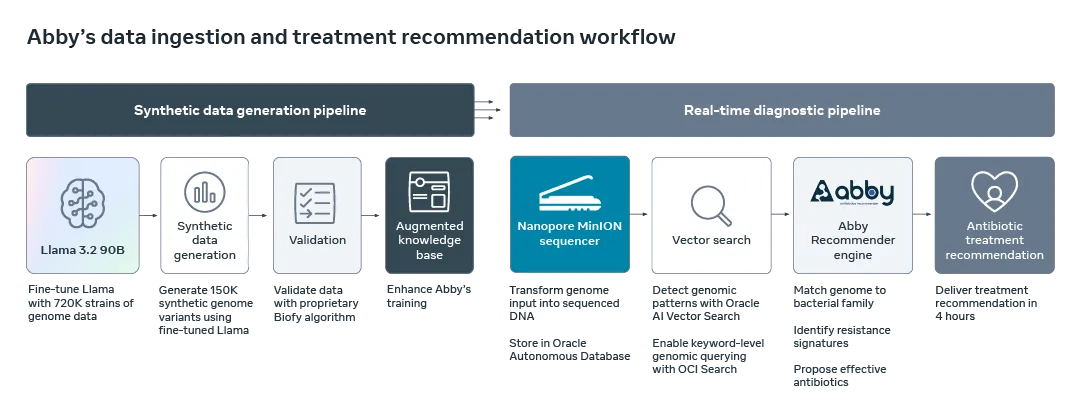
To train Abby, Biofy initially used data from the National Center for Biotechnology Information’s (NCBI) genome database. While the NCBI database offered about 720,000 bacterial strains, it wasn’t enough to accommodate the rapid mutation of bacterial DNA.Biofy turned to Llama 3.2 90B to create synthetic genetic data. After fine-tuning the model with the NCBI database, Llama created over 150,000 additional data points, equipping the solution for more reliable and effective treatment proposals.In production, Abby runs on Oracle Cloud Infrastructure (OCI). It uses Nanopore MinION technology to sequence bacterial data and then vectorizes it for storage in Oracle Autonomous Database. Oracle AI Vector Search picks out patterns in genetic material, enabling fast bacterial classification and diagnosis — including novel bacteria that have evolved beyond the data in Abby’s knowledge base.
Saving lives with AI-powered diagnoses and treatment of infectious diseases
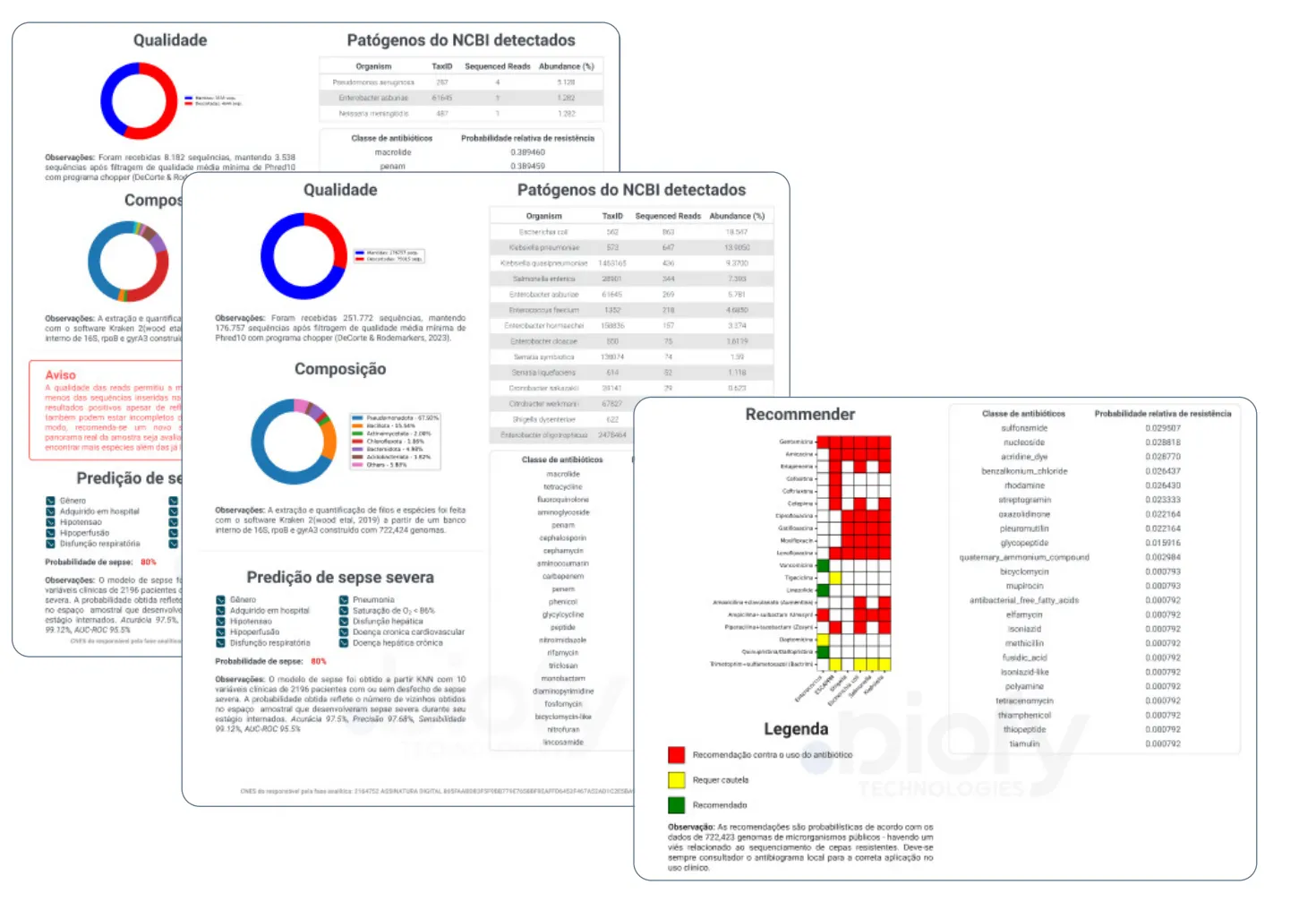
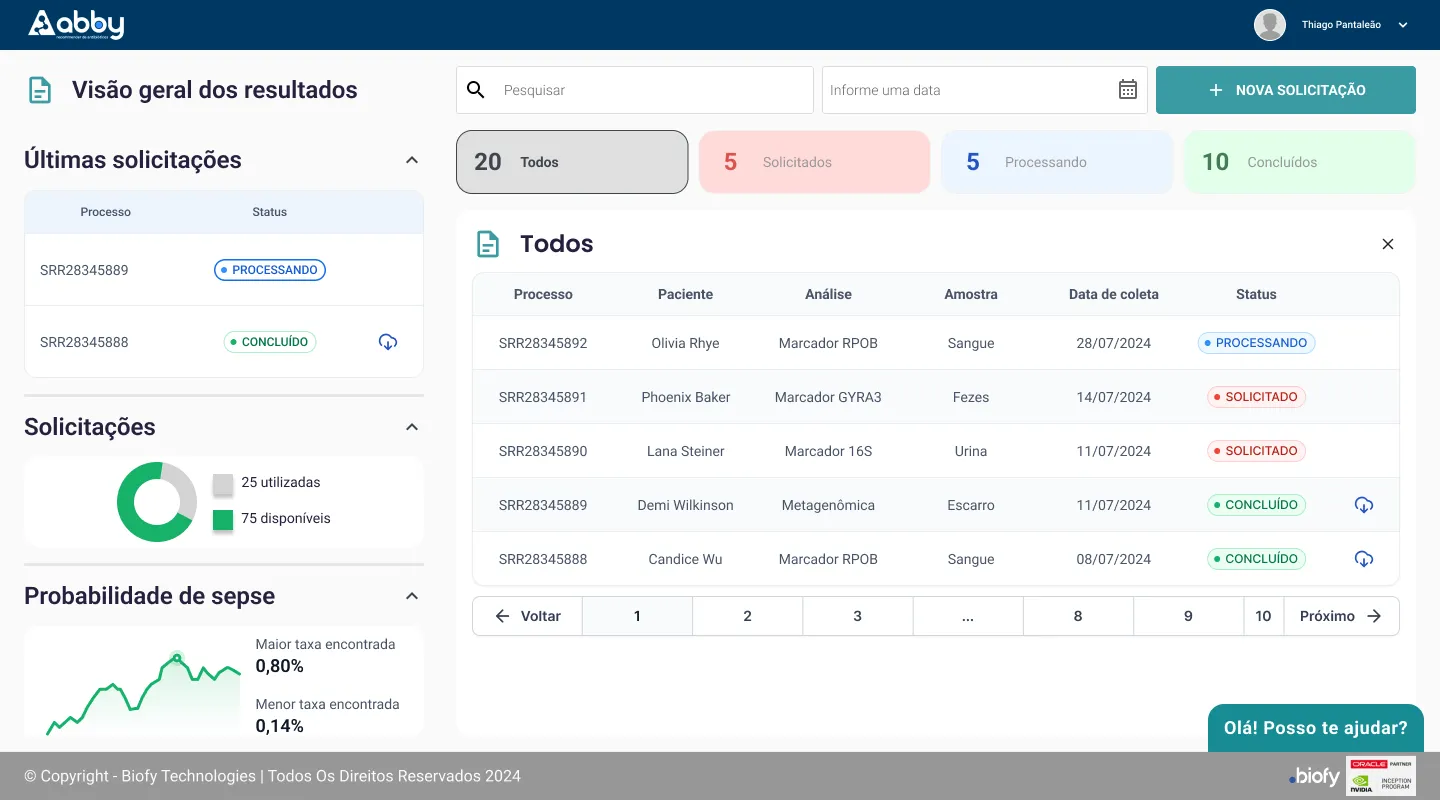
With Abby, hospitals can quickly identify bacterial infections, determine antibiotic resistance and develop precise treatments. By cutting diagnostic time from days to just four hours, Abby helps physicians treat more patients more effectively. In a single year, Abby prevented an estimated 2,000 deaths.