Accelerating radiology reporting to help doctors deliver streamlined and accessible patient care
At a glance
Industry
HealthcareUse case
Accelerating radiology reporting to reduce turnaround timesGoal
Improve patient care by enabling faster radiology diagnostic servicesLlama versions
Llama 3.1 8BDeployment
Amazon SageMaker AI, self-hosted
Closing the gap between radiology demand and supply
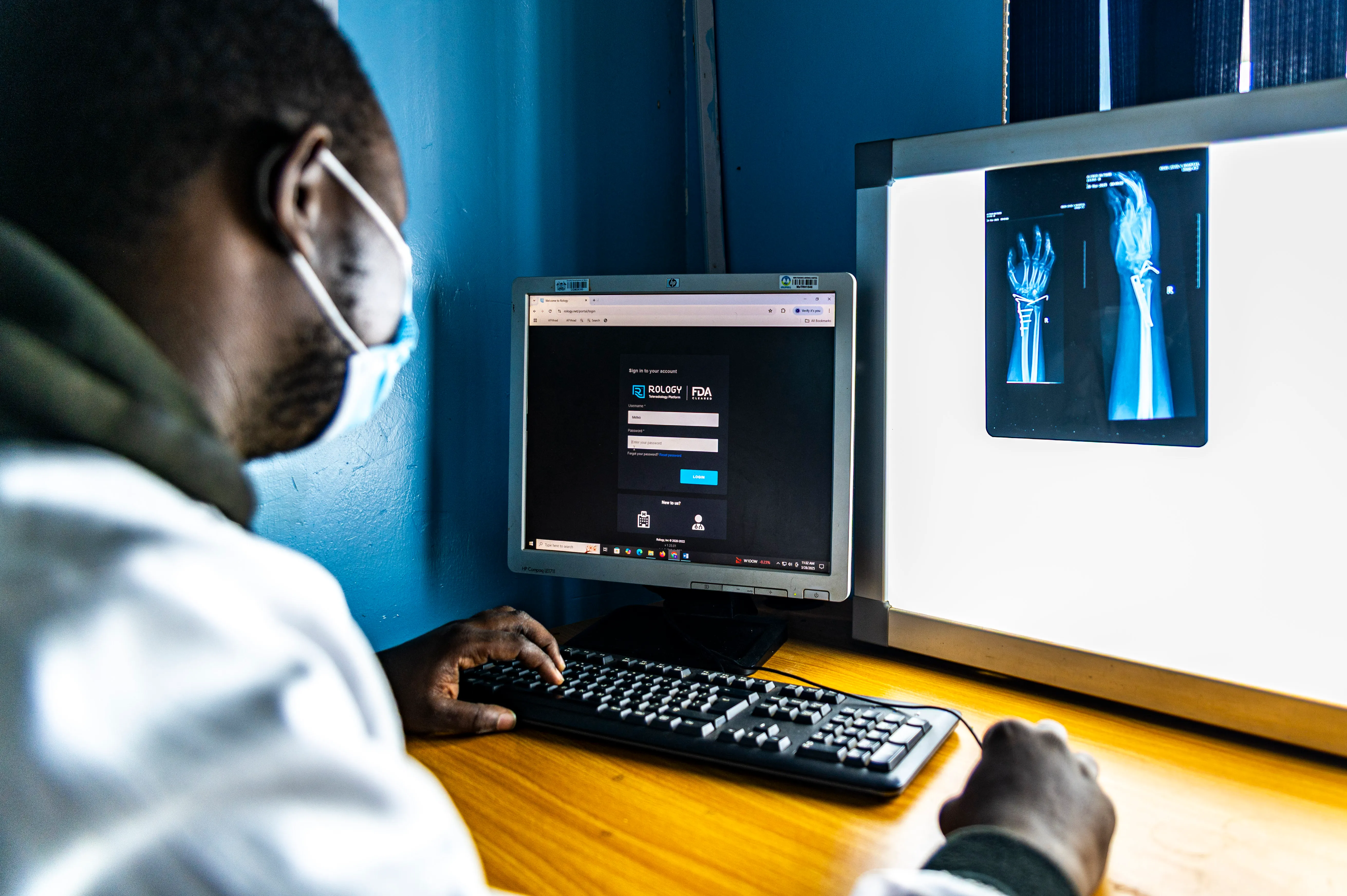
Medical imaging can help save lives, whether it’s diagnosing cancer at an early stage or providing critical information about bone fractures and internal bleeding during emergency care. But in some parts of the world, it can be difficult for healthcare practitioners to access radiology services in time to provide the best care.Rology is bridging the gap between radiologists and the healthcare providers who need them, especially in regions suffering from radiologist shortages. The company’s AI solution matches hospital cases with the most qualified radiologists worldwide, who can then provide fast, accurate diagnostic reports.Automate and standardize report summaries
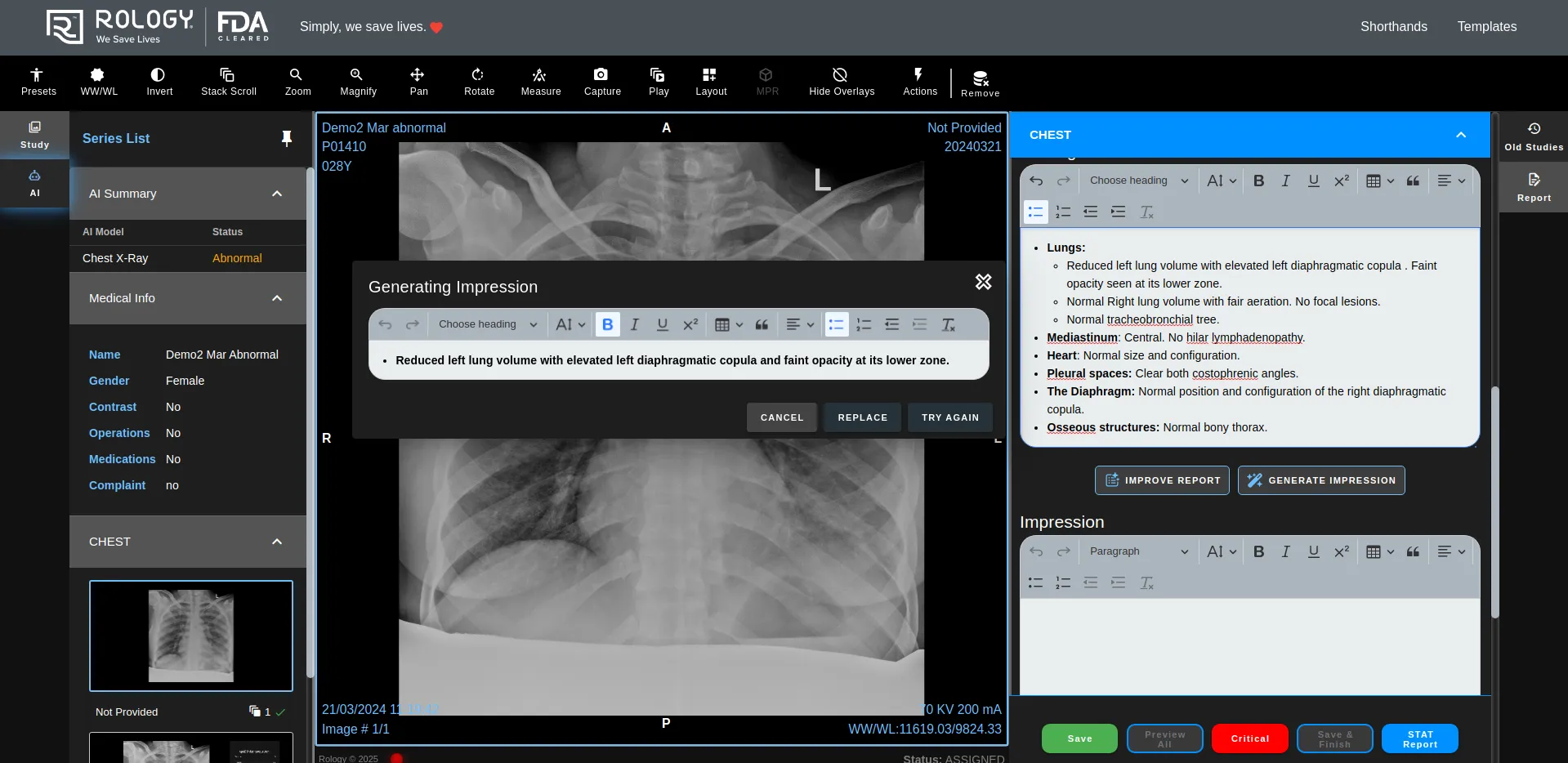
As part of delivering their report, radiologists must write detailed clinical findings into narrative summaries called impressions. Impressions are possibly the most important part of the report because they give actionable information, including diagnoses and recommendations for follow-up tests. However, they are time-consuming and cognitively demanding to write.Rology wanted to simplify the process of drafting impressions. By using a large language model to ingest structured findings and output clear, standardized impressions, the Rology team realized they could overcome a major bottleneck and reduce turnaround times and inconsistencies.
Fine-tuning Llama to automate drafting
The team needed a model that could be fine-tuned on domain-specific datasets, a capability that is often limited or cost-prohibitive with generalized proprietary models. Meanwhile, domain-specific model options lacked the flexibility to generalize across the full spectrum of imaging modalities, including CT, MRI, ultrasound and mammography. Rology chose Llama 3.1 8B because it offered both high performance and open-source control and transparency. With Llama, Rology’s AI team was able to train on tens of thousands of radiology reports. The model also provided advanced features like extended context windows, improved reasoning and multimodal capabilities.Once they had customized their model, Rology evaluated it for clinical relevance, linguistic accuracy and processing speed. Llama showed a high performance-to-size ratio across benchmarks, making it ideal for efficient, scalable deployment in healthcare settings.
Dynamic prompting improves flexibility and accuracy
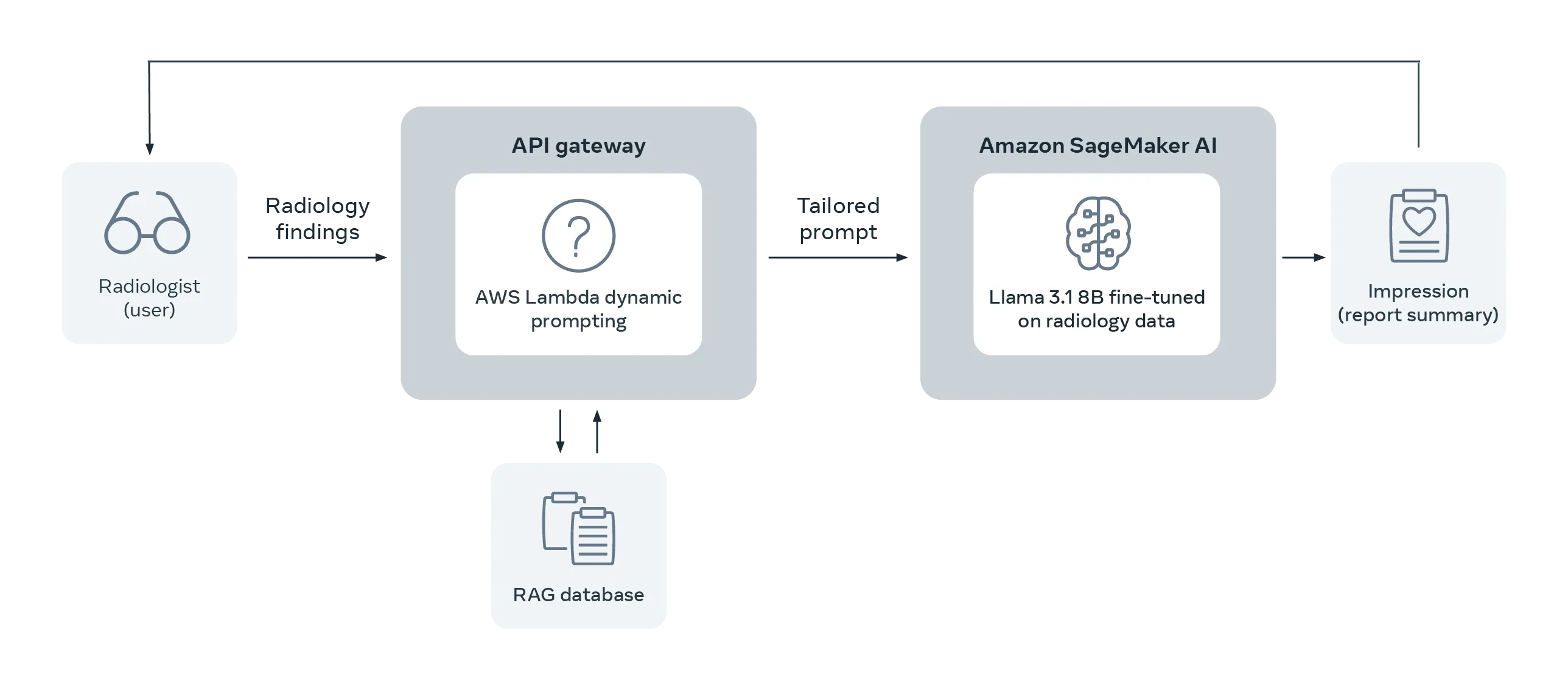
Rology’s AI team fine-tuned Llama 3.1 8B on an extensive set of curated radiology reports and public resources, as well as Rology’s proprietary dataset of X-ray, CT and MRI reports. To make the fine-tuning process more resource-friendly, the team employed techniques such as QLoRA (4-bit quantization) with rank-64 adapters.The impression generation process is integrated with a retrieval-augmented generation (RAG) setup and dynamic prompting. This allows for more flexible and context-aware impression generation, tailoring the output to the nuances of each case. Rology’s team developed a sophisticated prompt engineering strategy to guide the model in generating clinically accurate text.For fine-tuning and prompt engineering, Rology deployed the model on Amazon SageMaker AI, using AWS Lambda functions via an API gateway for dynamic prompting. For production, Docker containerization ensures a consistent and reproducible environment.
Faster action for better patient care
Rology cut the time to produce a radiologist-validated diagnostic report from 4.1 minutes to just 1.6 by using Llama-enabled impressions, enhanced findings and automated grounded reporting — helping clinicians act more quickly, particularly in emergency situations. This can lead to earlier interventions, more accurate treatments and fewer diagnostic delays. Radiologists can also focus on more complex diagnostic reasoning instead of repetitive narrative construction.Rology says it’s now possible to deliver a radiology report to a remote hospital in as little as one to four minutes. This level of speed and accessibility can transform healthcare equity, even in the most remote areas of the world.