The proposed automatic issues-triaging system uses Llama to analyze issues and generate insights. The system's architecture can be broken down into the following components:

The first step is to collect issue data from the repository. This can be done using APIs or other relevant tools. The collected data should include issue titles, descriptions, labels, and other relevant metadata.
The next step is to integrate Llama into the system. This involves using Llama's API to analyze the collected issue data. Llama's capabilities can be leveraged to:
Using Llama's output, the system analyzes issues to identify patterns, categories, and priorities. This analysis helps in understanding the nature of the issues and their impact on the project.
Based on the analysis, the system generates insights that can help maintainers understand the state of the repository. These insights can include:
The final step is to create reports that present the insights generated by the system. These reports can be used by maintainers to make informed decisions about issue management.
To demonstrate the effectiveness of the proposed system, let's consider a use case where we apply it to triage GitHub issues.
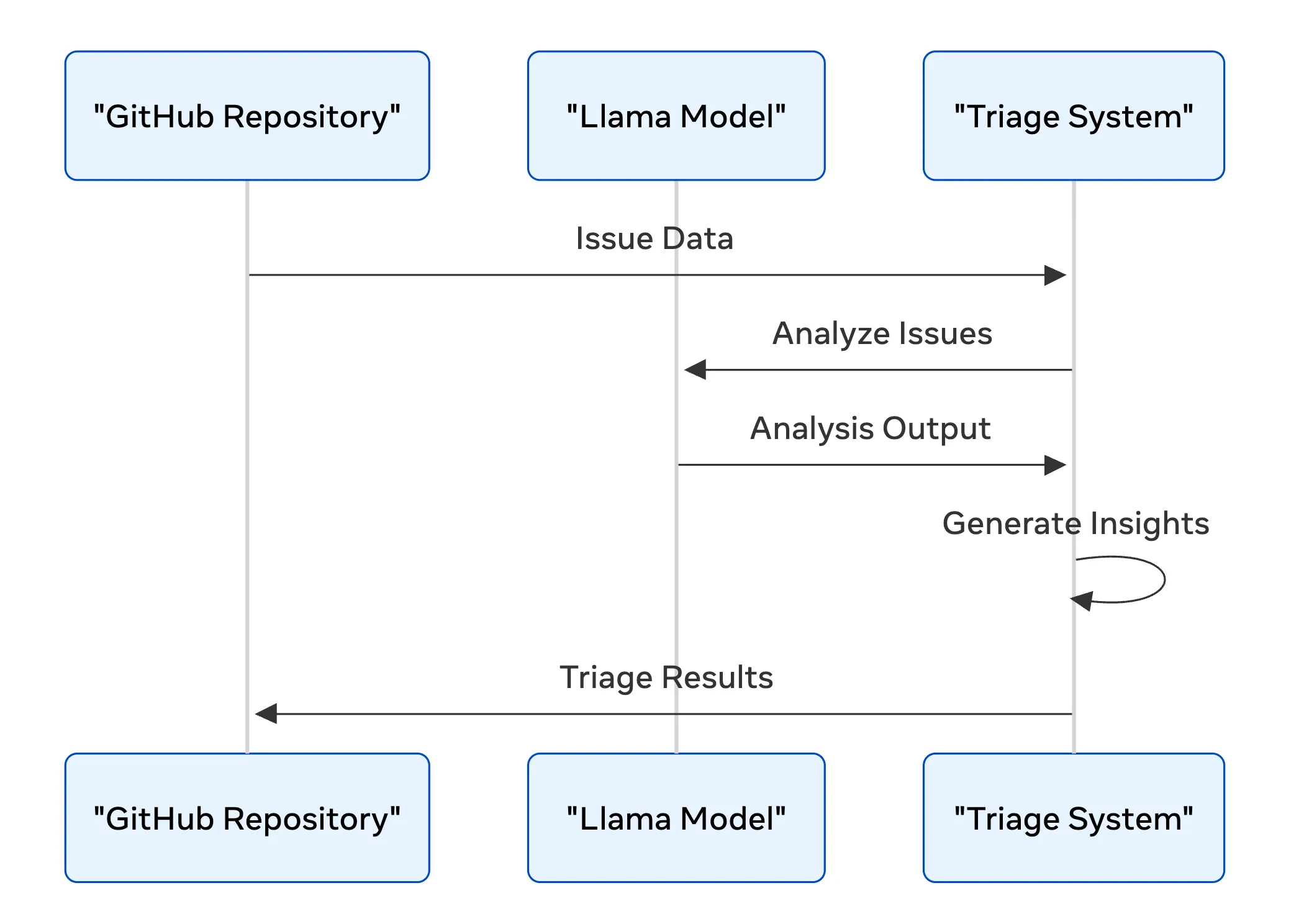
In this example, the system collects issue data from a GitHub repository, analyzes it using Llama, generates insights, and then updates the repository with the triage results.