First, we load the original Llama tokenizer and its vocabulary.
python
Next, we load the new language tokenizer--in this case, Hindi--and its vocabulary.
python
We then merge the two tokenizers by adding the new tokens to the original tokenizer.
python
The extend_tokenizer.py script appends the new tokens to the original tokenizer's vocabulary and saves the extended tokenizer.
We verify that the merged tokenizer works as expected by testing it on a text sample.
python
Output:
python
RAFT is a technique that combines fine-tuning with Retrieval Augmented Generation (RAG) to better utilize custom domain text data. RAFT teaches the model to differentiate between oracle documents (D*) that contain the answer to a question and distractor documents (Di) that do not.
RAFT architecture
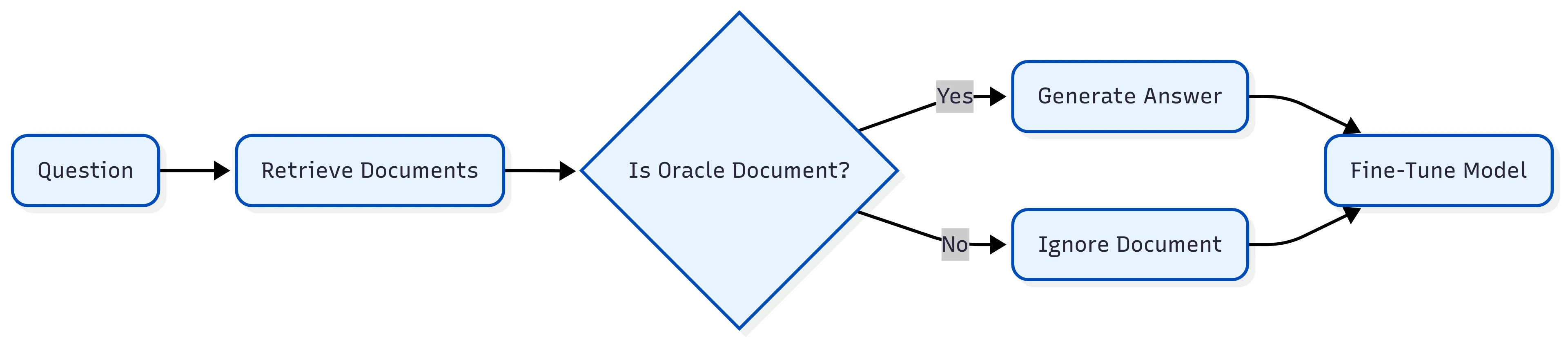
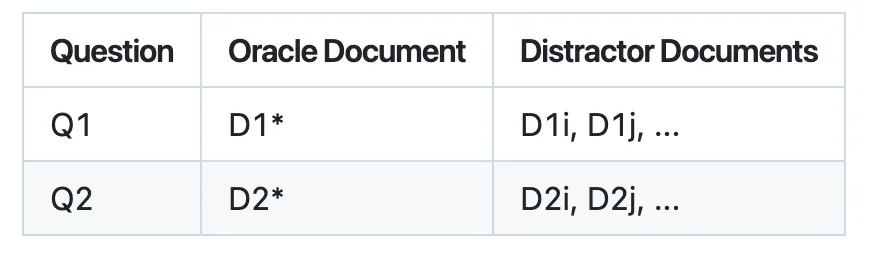
To fine-tune Llama for the new language, we need to prepare a dataset with questions, oracle documents, and distractor documents.
We prepare a dataset with the following format:
We fine-tune Llama using the RAFT technique, which involves training the model to differentiate between oracle documents and distractor documents.