Tool calling is a mechanism that enables Llama to interact with external tools and services. This is particularly useful when the model is faced with a task that requires specific functionality not inherent in the model itself, such as accessing real-time data, performing complex computations, or interacting with external APIs.
To implement tool calling with Llama, the following steps are involved:
Identify and define the tools that can be used by Llama. This involves specifying the tool's functionality, input parameters, and output format.
Modify the Llama model to recognize when a tool is needed and to select the appropriate tool from the registry.
Implement the logic to execute the selected tool with the required parameters.
The following Mermaid diagram illustrates the tool calling process:

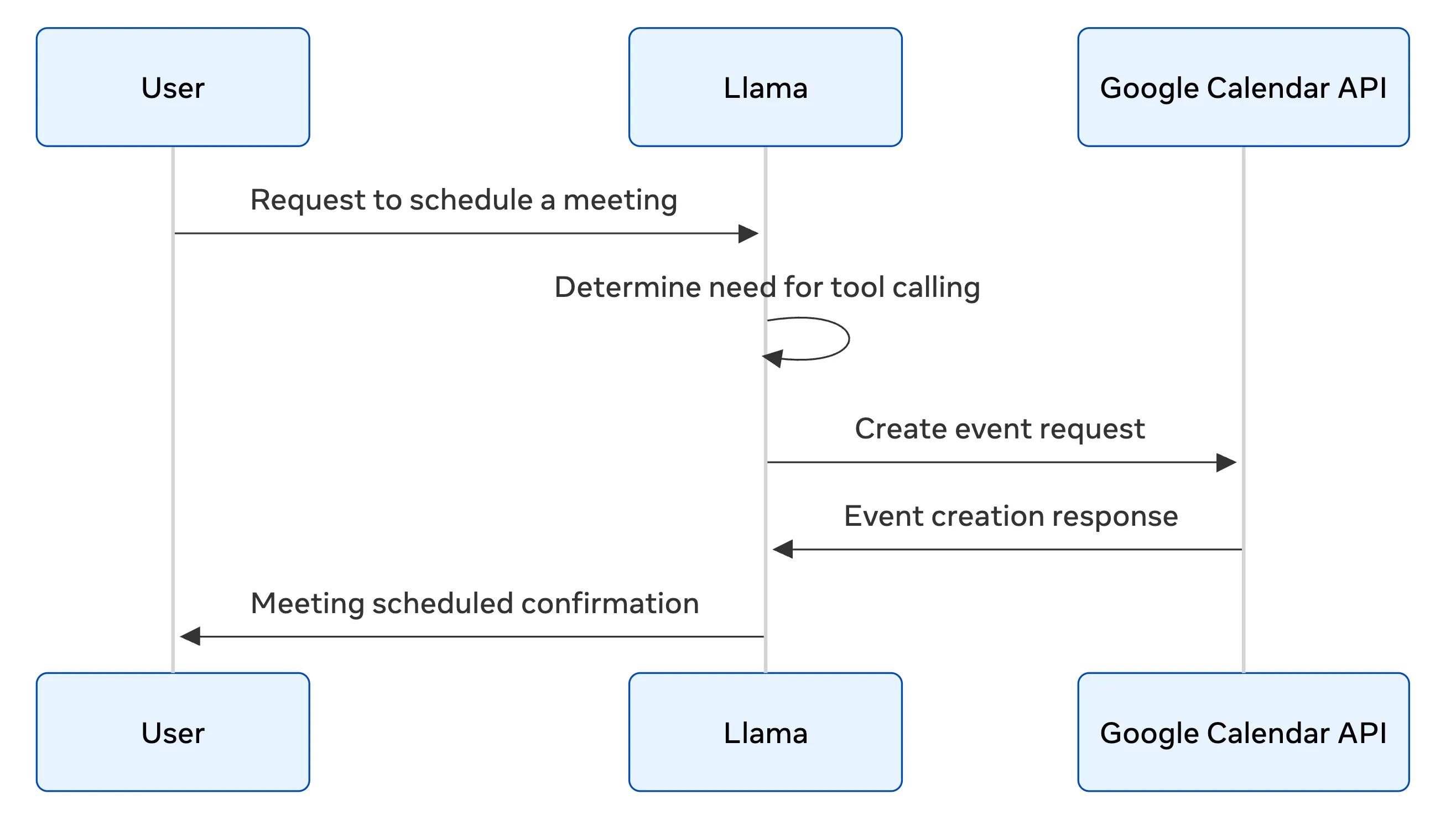
One practical application of tool calling with Llama is building a Google Calendar assistant. The assistant can use tool calling to interact with the Google Calendar API to schedule meetings, retrieve calendar events, and more.
The following sequence diagram illustrates the interaction between the user, Llama, and the Google calendar API: